6.1 Mapping the Measurement Stack
Can We Cut TV Spend by 20%?
A CFO asks: “We spent millions on TV last year. If we cut that budget by 20%, would sales actually change?”
The dashboard offers ROAS by channel: paid search looks strong, retargeting looks efficient, and TV looks weak. But nobody can confidently answer the CFO’s question.
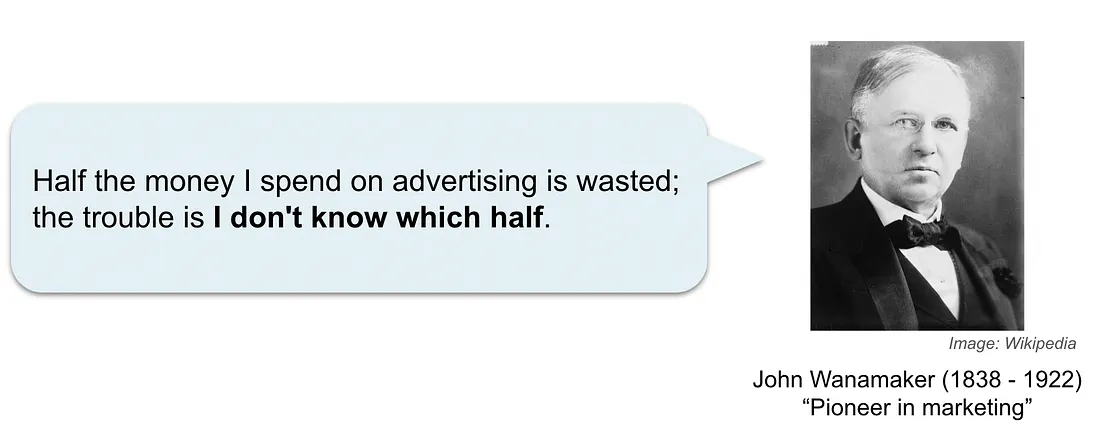
That is because the dashboard is answering a different question. It can show which tracked touchpoints appeared before conversion. It cannot estimate the counterfactual: what would have happened if TV had not run.
TV might have created demand that later appears as branded search. If that’s the case, cutting TV would not only lower TV’s measured impact, but could also shrink the volume that search captures later.
This isn’t just a last-click issue. Linear, time-decay, and even Google’s data-driven attribution all have the same limitation: they split credit among observed touchpoints, but they cannot estimate the counterfactual. And that’s exactly what you need for budget allocation.
Attribution is not the wrong answer — it just answers a different question.
Three Questions, Three Tools
Marketing measurement has three different questions, and each needs a different tool.
- Attribution answers: What happened on the path to conversion? — the right tool for tactical questions inside a trackable channel (Creative A vs. B in Google Ads, which keyword converted, which audience responded).
- MMM answers: How should we allocate budget across channels? — the right tool when comparing TV, search, social, and offline channels that don’t share a single click trail. We develop MMM in Section 6.2.
- Experiments answer: Did this marketing activity actually cause incremental sales? — the right tool for causal validation, typically via geo-lift designs. We come back to experiments in Section 6.3.
The TV example shows what happens when you try to answer a budget allocation question with a tool designed for attribution. The next section covers how MMM addresses this gap.